DANGER CLOSE
STEEL FIRE NET · TACTICAL FDC · 1-505 PIR (82 ABN)

DANGER CLOSE

CALL FOR FIRE · CREEPING METHOD · 6-GUN 105 mm BATTERY

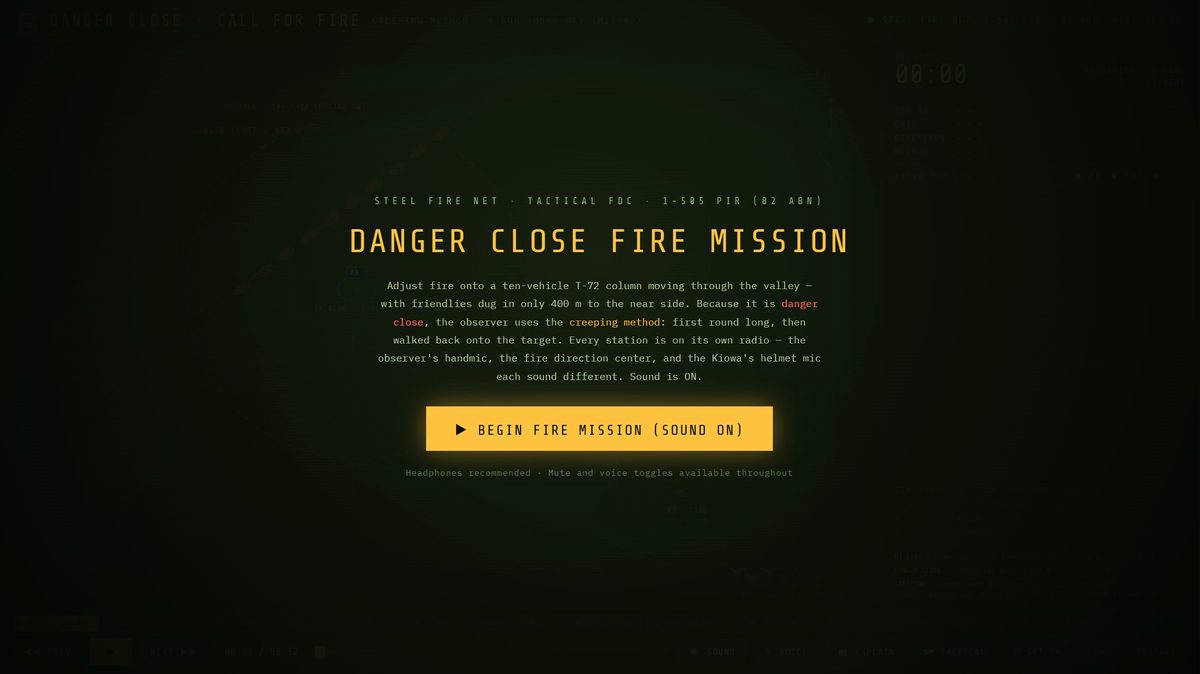
A ten-vehicle T-72 column is moving down the valley. Friendly troops are dug in 400 metres from the target - close enough that every round is the observer's personal responsibility. This is what that call actually sounds like, start to finish, from the forward observer's position.

▶  BEGIN FIRE MISSION
6½ minutes · sound on, headphones recommended · loads ~8 MB
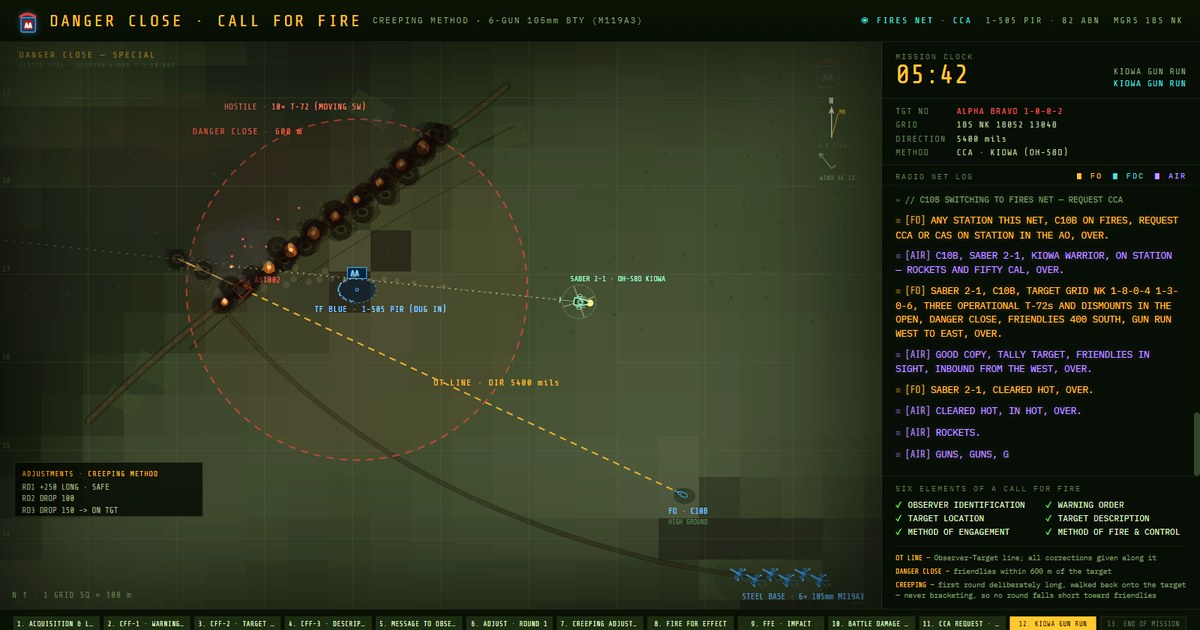
Tactical map at the Kiowa gun run: burning T-72 column inside the danger-close ring, Saber 2-1 mid-run, and the full radio net log
CCA · KIOWA GUN RUN - Saber 2-1 works the survivors after the artillery. Every transmission on the net is logged at right.

THE MISSION

WHY THE FIRST ROUND IS DELIBERATELY LONG

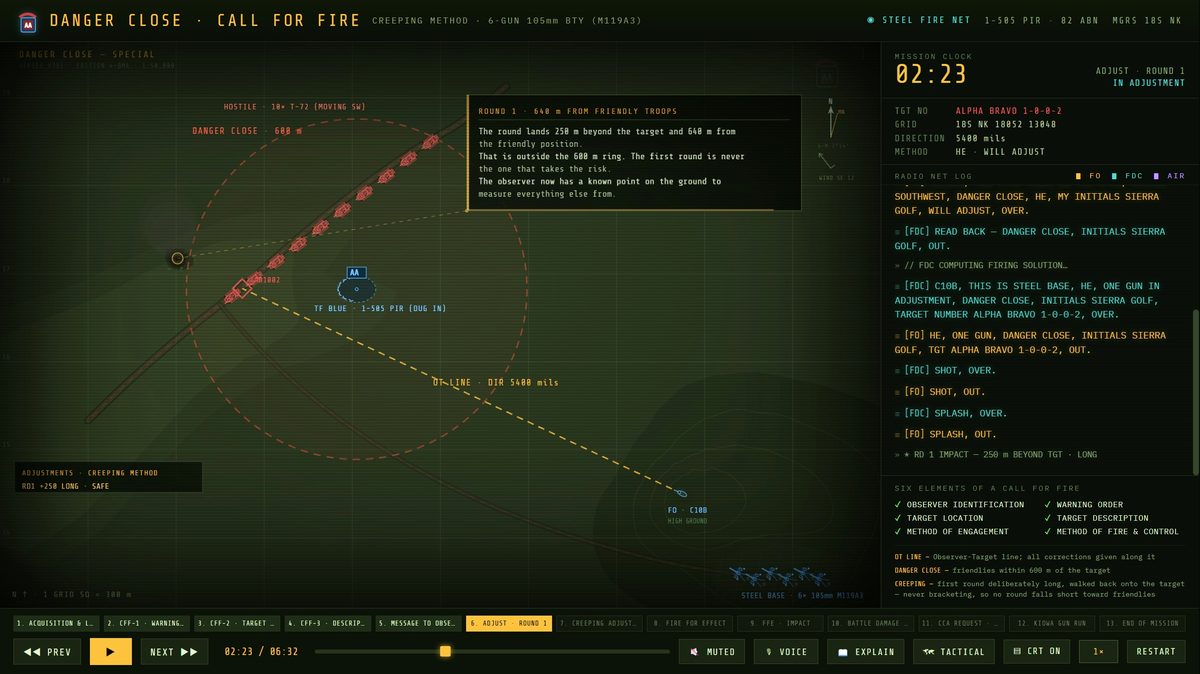
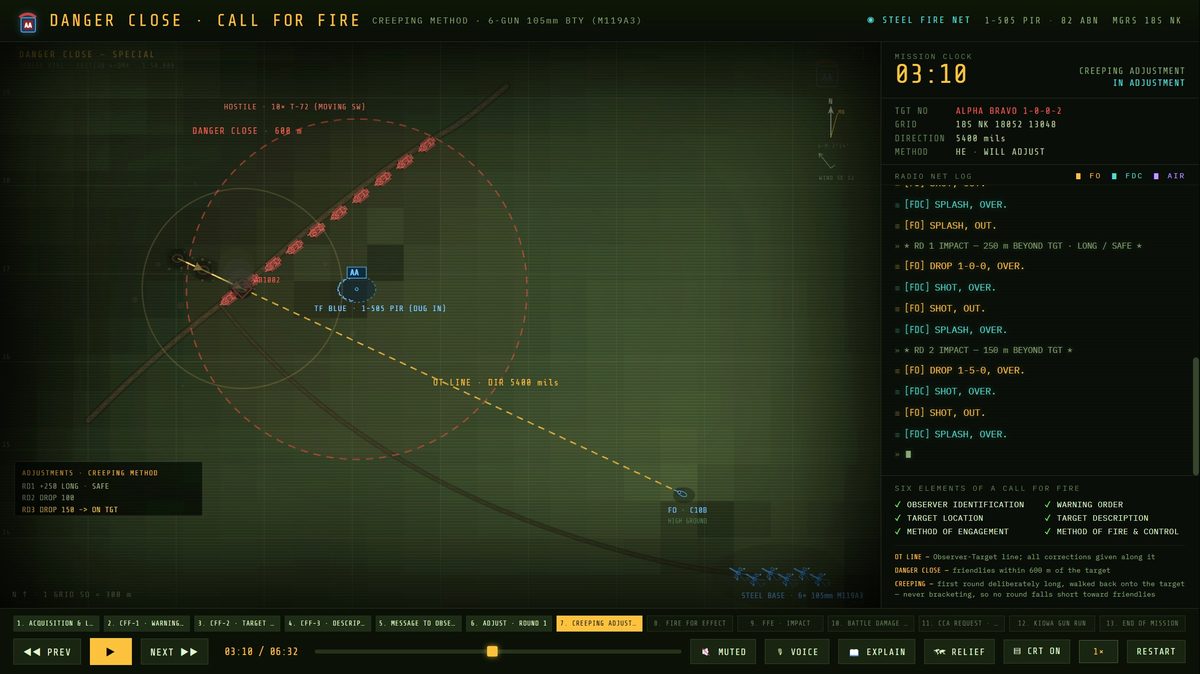
Because friendlies are inside the 600 m danger-close ring, the observer cannot bracket the target - walking rounds back and forth across it would eventually put one short, on top of his own people.

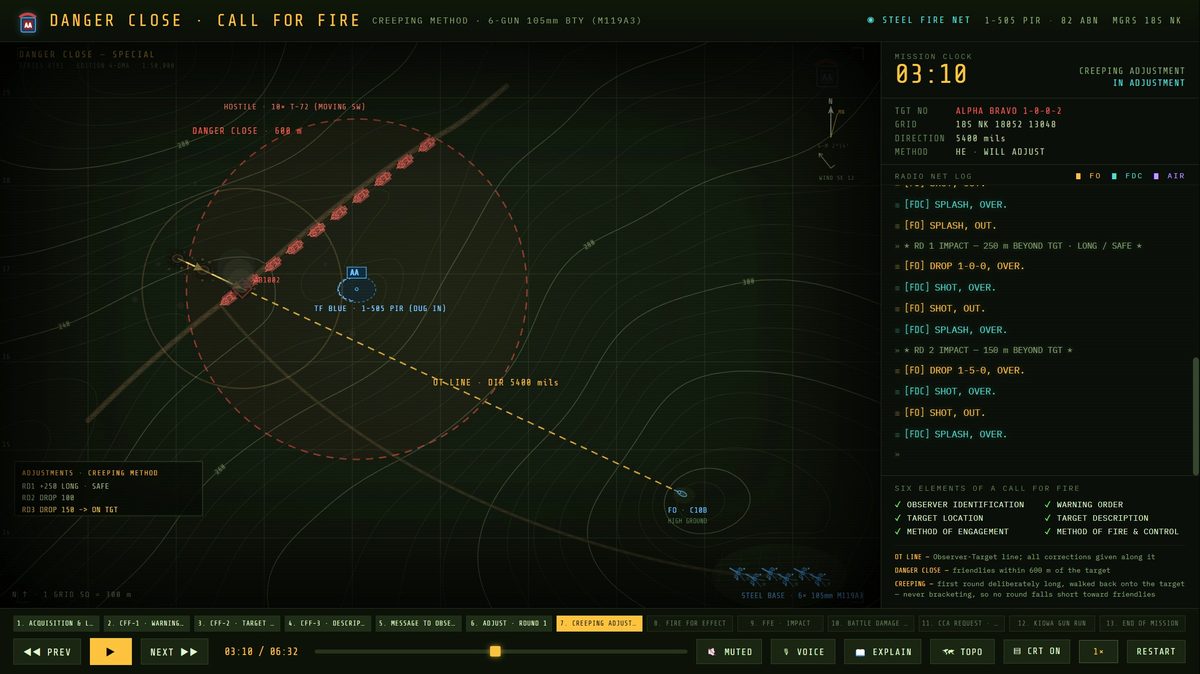
Instead he uses the creeping method: place the first round safely beyond the target, then walk it back onto the target from the far side in measured corrections. No round is ever short.

RoundCorrectionWhere it landsFrom friendlies
RD 1-250 m beyond the target640 m · outside the ring
RD 2DROP 100150 m beyond545 m
RD 3DROP 150on target403 m
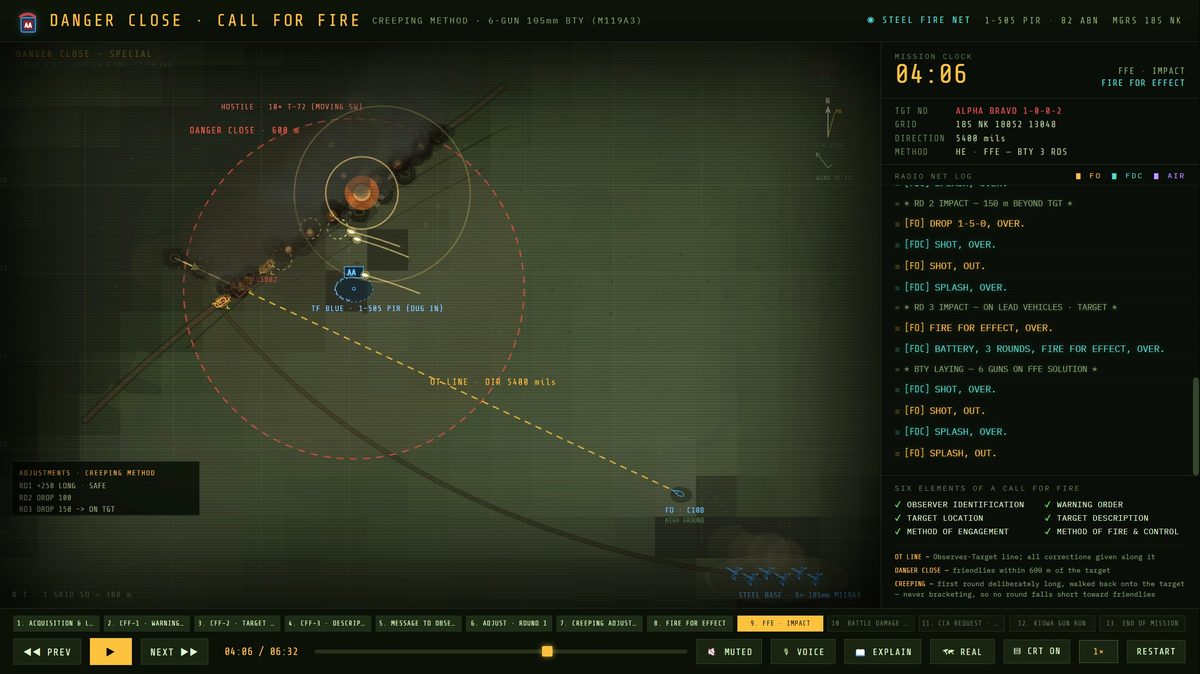
FFEFIRE FOR EFFECT18 rounds on the column403 m
Then the aircraft. Three vehicles survive the artillery with tracks broken but turrets still traversing. The observer switches to the fires net, requests close combat attack, and hands the target to a Kiowa Warrior - clearing it hot only after the pilot confirms he has the friendly position in sight.

KEY VIEWS

FOUR TERRAIN MODES OFF ONE HEIGHTFIELD · PRESS T TO CYCLE
The mission brief screen before the mission starts
THE BRIEF - the situation, before a single round is fired.
First round impact with an explanatory annotation card
ADJUSTMENT - round one lands long and safe. The teaching layer explains why, as it happens.
Fire for effect volley landing on the column
FIRE FOR EFFECT - eighteen rounds, craters accumulating along the beaten zone.
Topographic contour terrain view
TOPO - contour sheet. The observer's high ground and the valley floor become obvious.
Shaded relief hillshade terrain view
RELIEF - hillshade. The same ground, lit from the north-west.
Realistic vegetated terrain view during the gun run
REAL - vegetated ground, the road the column is marching on, and the wind that drives every smoke plume.

HOW IT WORKS

THE PARTS THAT ARE MODELLED RATHER THAN FAKED

THREE RADIOS, NOT ONE

Every station runs its own signal chain - microphone proximity, automatic gain, transmitter clipping, then the narrow band a radio actually passes. The observer on a handmic, the fire direction center flat and procedural on wire, and the pilot clipped and narrow under rotor noise all sound like different equipment in different places.

SOUND TAKES TIME

Audio is positioned from the observer's location. The gun report reaches you about a second after the tubes fire behind you; the impact you see at 1.7 km arrives roughly five seconds later. Distance dulls it, and the Kiowa doppler-shifts as it crosses.

THE GROUND IS REAL

One heightfield drives all four views. The observer sits on the military crest with verified line of sight; the battery is on level ground with no line of sight to the target - indirect fire from defilade; the friendlies are dug into dead ground.

PROCEDURE IS THE POINT

Digits are spoken fife, niner, tree, fower. Grids are read digit by digit. Every transmission closes with OVER or OUT, and every observer transmission gets a verbatim readback. Press E for the annotations that explain each step.

Controls. E explanation cards · T terrain view · C phosphor overlay · plus stage buttons to jump to any phase of the mission.

READY

SOUND ON. THE AUDIO IS HALF THE POINT.
▶  BEGIN FIRE MISSION
Best on a laptop or desktop · works on phones, but the display is wide